
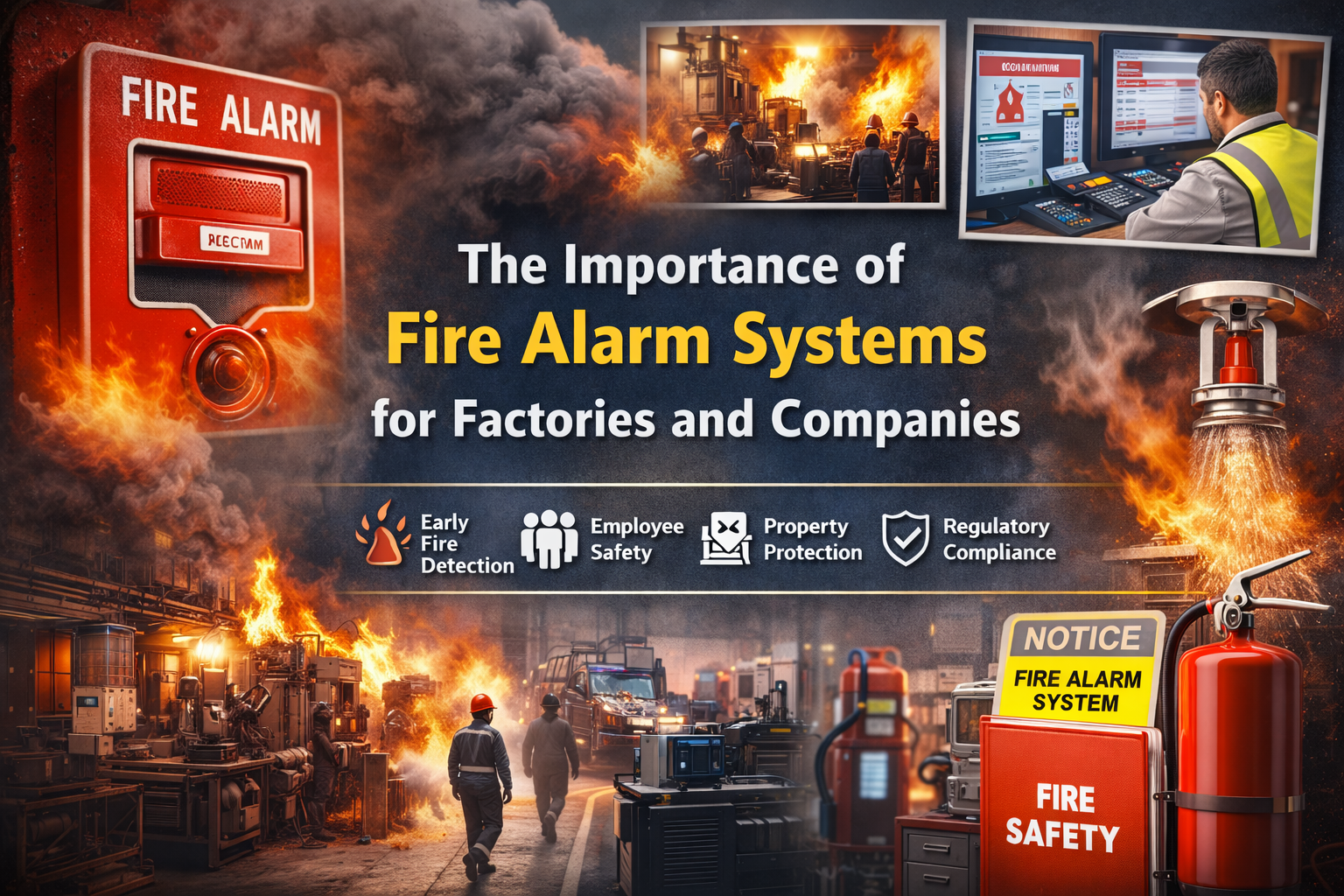
Fire safety is one of the most critical aspects of protecting factories and companies. Due to the presence of machinery, electrical equipment, flammable materials, and large numbers of employees, the risk of fire in industrial and commercial environments is significantly high. This makes Fire Alarm Systems an essential component of any safety and security strategy.
Early Fire Detection and Rapid Response
Fire alarm systems are designed to detect smoke, heat, or flames at an early stage. Early detection allows for immediate action before the fire spreads, reducing damage to property and minimizing the risk of injuries or fatalities. In factories, where fires can escalate quickly, early warning is crucial for effective emergency response.
Protecting Human Lives
The primary purpose of a fire alarm system is to save lives. Audible and visual alarms alert employees and visitors, allowing them to evacuate the building safely and quickly. In large companies and industrial facilities, clear and timely alerts help prevent panic and ensure organized evacuation procedures.
Minimizing Property and Financial Losses
Fires can cause severe damage to buildings, equipment, and raw materials, leading to major financial losses and operational downtime. Fire alarm systems help limit fire damage by enabling faster intervention from on-site fire suppression systems or local fire departments, thus protecting valuable assets and ensuring business continuity.
Compliance with Safety Regulations and Standards
Factories and companies are required to comply with local and international fire safety regulations. Installing and maintaining fire alarm systems helps organizations meet legal requirements, avoid penalties, and pass safety inspections. Compliance also improves the company’s reputation and demonstrates responsibility toward employees and stakeholders.
Integration with Other Safety Systems
Modern fire alarm systems can be integrated with sprinklers, emergency lighting, access control, and building management systems. This integration ensures a coordinated response during emergencies, such as automatically activating sprinklers, unlocking emergency exits, and shutting down hazardous equipment.
Enhancing Workplace Safety Culture
Having a reliable fire alarm system increases awareness of safety among employees. Regular testing and fire drills encourage preparedness and promote a strong safety culture within factories and companies, reducing risks and improving overall workplace safety.
Conclusion
In conclusion, fire alarm systems are not optional for factories and companies—they are a necessity. They protect lives, reduce property damage, ensure regulatory compliance, and support efficient emergency response. Investing in a high-quality fire alarm system is a vital step toward creating a safe, secure, and sustainable working environment.